How to Measure for Baking Without a Scale (Cups to Grams Chart)
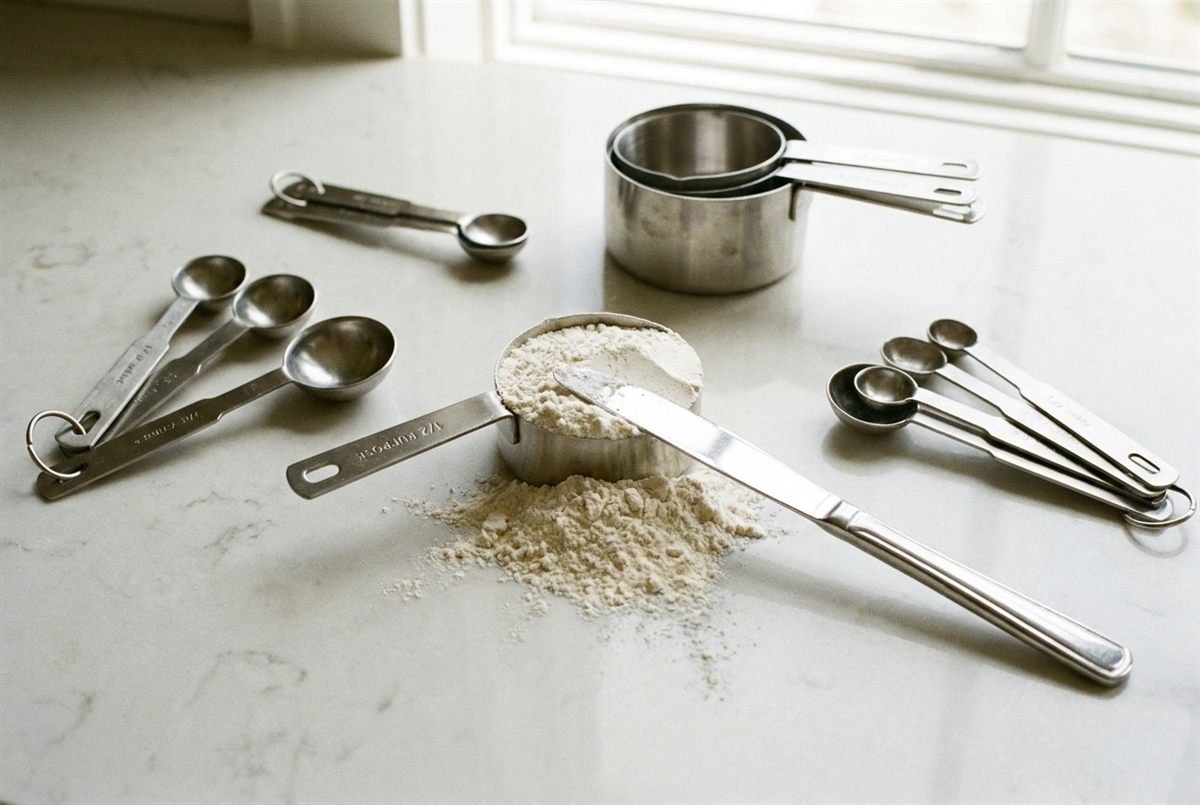
To measure for baking without a scale, use the spoon-and-level method: fluff the flour, spoon it lightly into the cup, and level the top. Never scoop the cup straight into the bag — that packs in up to 25% extra flour and is the single biggest reason beginner bakes turn out dry and dense. With careful cup measuring, you don’t need a scale for everyday baking. Here’s exactly how, plus a conversion chart.
The Quick Version
- Spoon and level flour — don’t scoop the cup into the bag.
- Scooping adds ~25% too much flour, the #1 cause of dry, dense bakes.
- Pack brown sugar, but spoon-and-level white flour and powdered sugar.
- Liquids: use a clear measuring cup at eye level. 1 cup = 240 ml.
The flour mistake that ruins bakes
If you dip your measuring cup into the flour bag and scoop, you compact the flour and pack in far more than the recipe wants — often a quarter more. That extra flour is why “I followed the recipe” cookies come out dry and cakes come out heavy. The fix takes five seconds: spoon and level.
How to spoon and level (step by step)
- Fluff the flour in its container with a spoon so it’s not compacted.
- Spoon it lightly into the measuring cup until it mounds over the top. Don’t tap or press.
- Level the top by sweeping across with the flat back of a knife.
Cups-to-grams chart (common baking ingredients)
| Ingredient | 1 cup ≈ |
|---|---|
| All-purpose flour (spooned & leveled) | 120–125 g |
| Granulated sugar | 200 g |
| Brown sugar (packed) | 220 g |
| Powdered sugar | 120 g |
| Butter | 227 g (2 sticks) |
| Cocoa powder | 85 g |
| Milk / water | 240 ml |
| Rolled oats | 90 g |
Measuring tips for everything else
- Brown sugar is the exception — pack it firmly into the cup so it holds the cup’s shape.
- Liquids go in a clear liquid measuring cup, read at eye level on a flat surface.
- Sticky things (honey, peanut butter) release easily if you oil the cup first.
- Baking powder/soda should be leveled, never heaping — too much makes cakes sink.
Frequently asked questions
How do you measure flour without a scale?
Spoon and level: fluff the flour, spoon it lightly into the cup until overflowing, and sweep the top level. Never scoop the cup into the bag — it packs in up to 25% too much.
How many grams is one cup of flour?
About 120–125 g of all-purpose flour, spooned and leveled. Sugar is ~200 g, packed brown sugar ~220 g, butter 227 g, and 1 cup of liquid is 240 ml.
Do you really need a kitchen scale to bake?
No — careful cup measuring works well for everyday baking. A scale is more accurate and worth getting eventually, especially for bread and pastry, but it’s not required to start.
Bake with confidence
Now put it to use with our easy baking recipes for beginners, or troubleshoot a flop with why did my cake sink in the middle. Browse all beginner recipes.