How to Grease and Flour a Pan (So Cakes Never Stick)
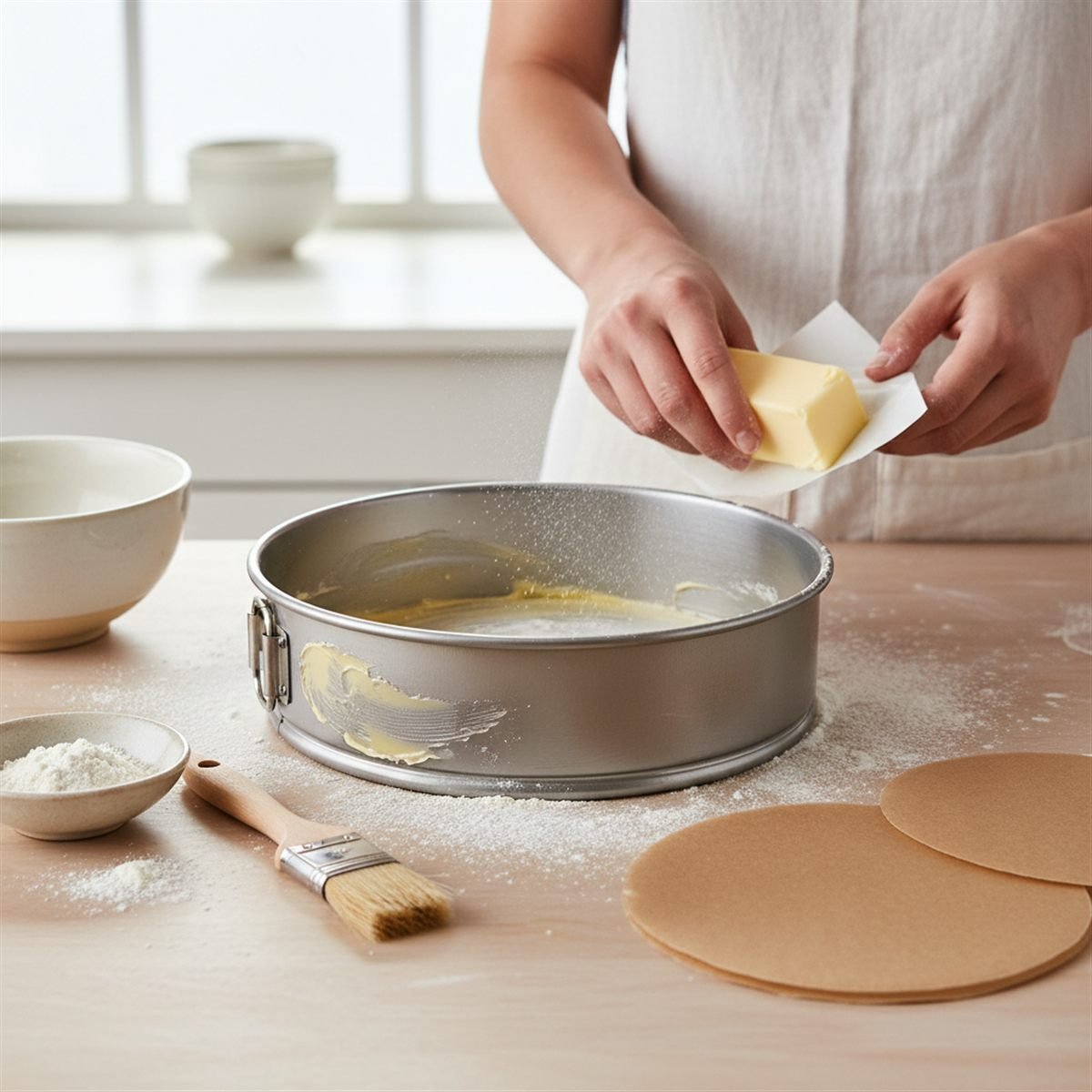
To grease and flour a pan, coat the whole inside with softened butter, add a spoonful of flour, and tilt and tap until every surface is dusted, then tip out the excess. That thin barrier is what lets cakes release cleanly. For flat-bottomed pans, a parchment circle is even more foolproof; for bundt pans, get into every groove.
The Quick Version
- Grease everything — thin layer of butter or shortening, into every corner.
- Flour and tap — coat all greased surfaces, tip out the excess.
- Parchment circle for round/square pans = the most foolproof.
- Bundt pans: brush into every groove, or use baking spray with flour.
How to grease and flour a pan
- Grease. Rub softened butter or shortening over the entire inside, including the corners and up the sides.
- Flour. Add a spoonful of flour, then tilt and tap the pan so it coats all the greased surfaces.
- Tap out excess. Turn the pan over and tap to remove loose flour — you want a thin, even coat.
- For extra insurance, line the bottom with a parchment circle and grease that too.
Foolproof tip: for chocolate cakes, dust the greased pan with cocoa powder instead of flour — it prevents a white floury film on the outside of the cake.
Frequently asked questions
How do you grease and flour a pan?
Coat the inside with butter, add flour, tilt and tap to coat, then tip out the excess. It creates a non-stick barrier.
Grease and flour or parchment?
For flat-bottomed pans, grease + a parchment circle is most foolproof. For bundts, grease and flour every crevice.
How do you grease a bundt pan?
Brush softened butter into every groove, flour thoroughly, and tap out excess — or use a flour-containing baking spray. Cool 10–15 min before turning out.
Can I use cooking spray?
Plain spray often isn’t enough. A baking spray with flour works great; with plain oil spray, still dust with flour.
More baking basics
See all our baking tips for beginners, or learn when a cake is done.