How to Measure Flour Correctly (Spoon & Level)
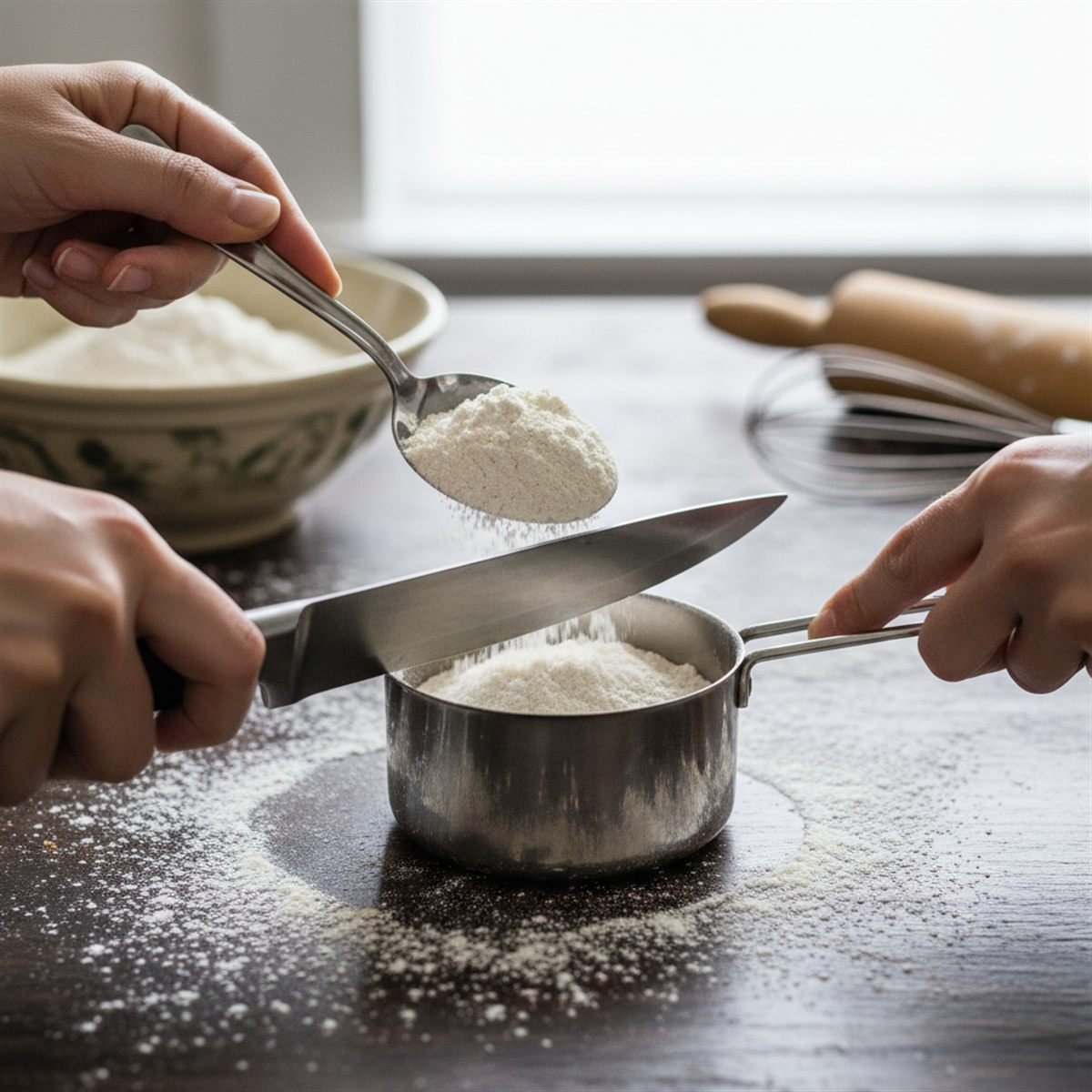
To measure flour correctly, fluff it, spoon it lightly into the cup, and level the top with a knife — never scoop the cup into the bag. Scooping packs in up to 25% extra flour, which is the #1 cause of dry, dense bakes. Better yet, weigh it: one cup of all-purpose flour should be about 120–125 grams.
The Quick Version
- Spoon & level — fluff, spoon into the cup, level with a knife.
- Never scoop the cup into the bag (packs in 25% extra).
- 1 cup AP flour ≈ 120–125 g — weigh it for accuracy.
- Too much flour = dry, dense — the most common bake-ruiner.
The spoon-and-level method
- Fluff the flour in the bag or canister with a spoon — it settles and compacts over time.
- Spoon it lightly into the measuring cup until it’s heaped over the top. Don’t tap or pack it.
- Level the top with the flat back of a knife, sweeping off the excess.
Foolproof tip: if you bake often, a $10 kitchen scale pays for itself instantly — weighing flour in grams is faster, more accurate, and means one less cup to wash.
Frequently asked questions
How do you measure flour correctly?
Fluff, spoon into the cup, and level with a knife. Never scoop the cup into the bag — it packs in 25% extra.
How many grams is a cup of flour?
About 120–125 g measured correctly. Scooping can give 150 g+, which is why a scale is best.
Why does too much flour ruin baking?
It absorbs moisture and adds structure — making bakes dry, dense and tough. Mismeasured flour is the top cause of dry results.
Do I need to sift first?
Usually no — spoon-and-level is enough. Sift only when the recipe says to, and watch the wording order.
More baking basics
See all our baking tips for beginners, or measure without a scale.